Baling vs. Throwing Away: The Real Cost Comparison
Throwing recyclable material into a dumpster feels like the easy, free option, you already have the dumpster, so why not use it? But this apparent simplicity hides significant costs. When you compare the full financial picture of baling versus throwing away, the difference is often dramatic. Here's the real cost comparison.
The Hidden Costs of Throwing Away
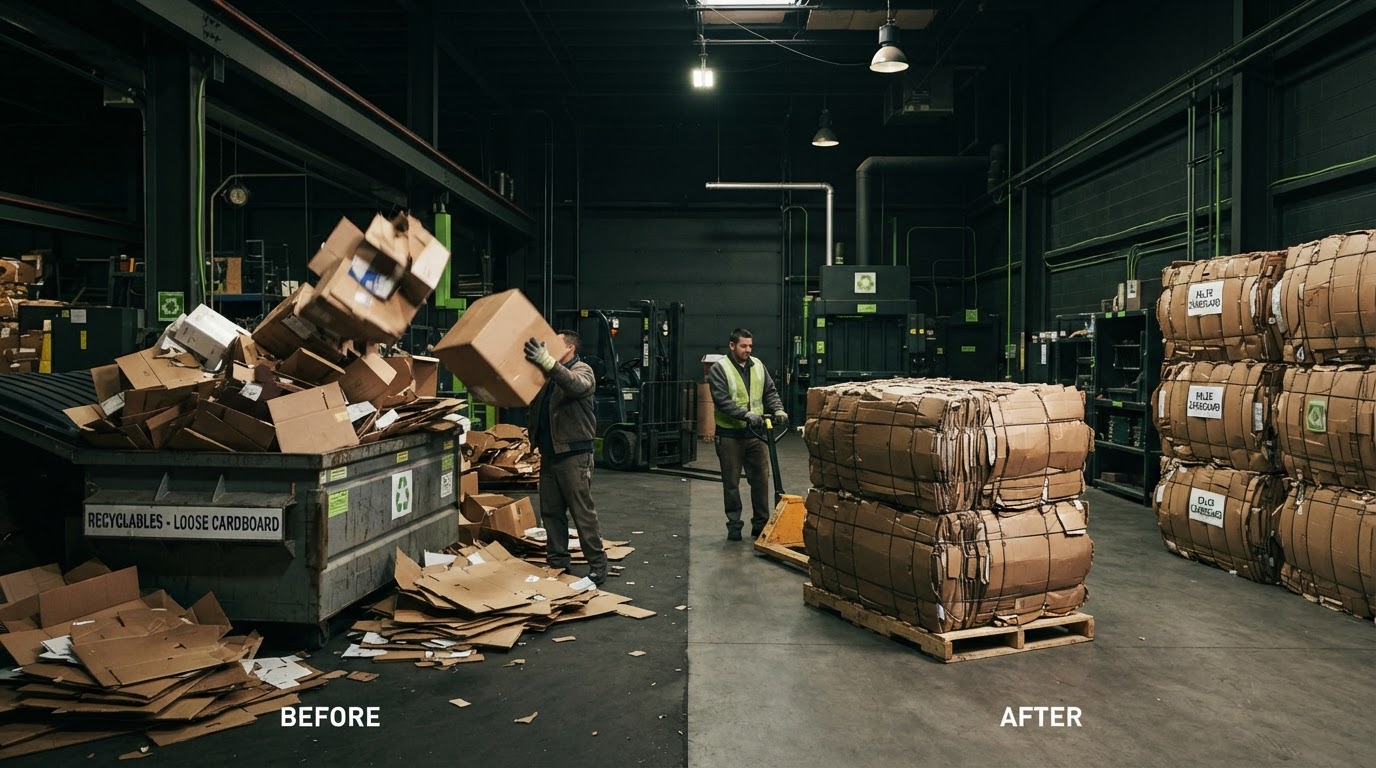
When recyclables go into a dumpster, they fill volume rapidly, cardboard and plastic are mostly air in loose form. This drives more frequent pickups, each of which costs money. You also lose the commodity value of the material, cardboard and aluminum that could generate rebates instead become disposal costs. And you pay container rental and fees on dumpsters sized for material that baling could eliminate. See our success stories for businesses that quantified these costs.
The Baling Alternative
Baling compresses recyclables into dense bales, dramatically reducing volume. The same material that filled multiple dumpster pickups becomes a few stored bales picked up on demand. The baled material has commodity value, returned through rebates. And you reduce or eliminate dumpster needs for recyclables. See how our system works for the full system.
A Simple Example
Consider a business generating a ton of cardboard monthly. In loose form, that might require four weekly dumpster pickups at $150 each, $600 monthly, with zero value recovered. Baled, that same ton becomes a couple of bales picked up on demand, with rebate value offsetting costs. The net difference is substantial. See materials we recycle for what can be baled.
The Recycling Markets resource tracks commodity values that baling recovers.
The Bottom Line
Throwing away recyclables means paying to dispose of material that has value. Baling means capturing that value while reducing disposal costs. For businesses spending $1,000+ monthly, the difference often reaches 50%+ in total waste cost reduction.
Want to see your real cost comparison? schedule a free onsite assessment and we'll calculate it.