Flat-Rate vs. Per-Pickup Waste Pricing: Which Wins?
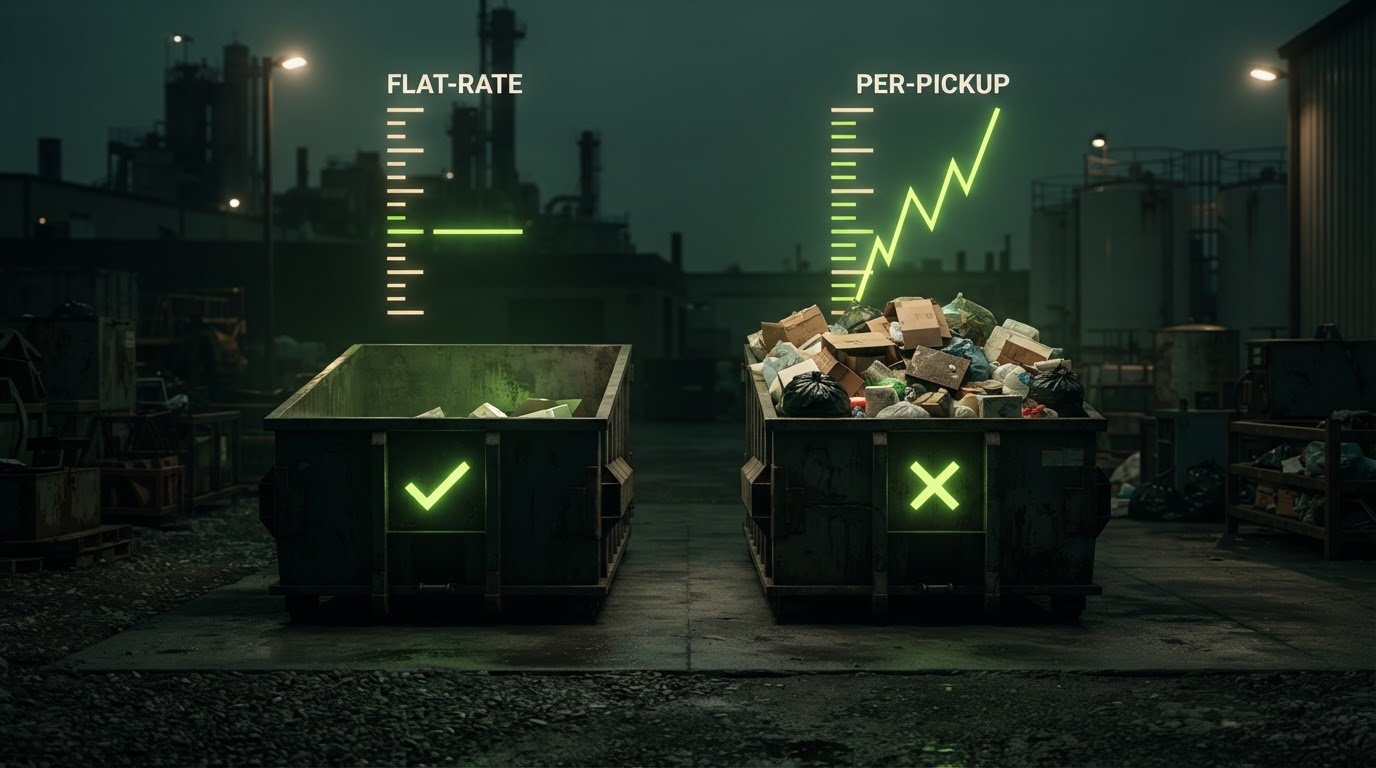
The way you're charged for waste service shapes everything about your costs. Traditional per-pickup pricing charges you every time a hauler empties your container, regardless of how full it is. Flat-rate pricing charges a predictable monthly fee that covers the whole system. The difference in incentives, and in cost, is significant.
The Problem with Per-Pickup Pricing
Per-pickup pricing creates a perverse incentive: your hauler makes more money the more often they pick up. There's no reward for efficiency. If your dumpster is picked up weekly but only half full, you're paying full price for half a load. Over months and years, that waste compounds. See our success stories for examples of how much businesses were overspending.
How Flat-Rate Works
RME's flat-rate bundle covers the baler, on-demand pickup, rebates, and data for a predictable monthly fee starting at $299. You bale material as you generate it, and we pick up only when you have meaningful volume. The incentive aligns: RME succeeds when your system runs efficiently, not when it generates unnecessary hauls. Learn more at how our system works.
Predictability for Budgeting
Flat-rate pricing also gives you budget predictability. No surprise fuel surcharges, no environmental fees, no rate hikes mid-contract. You know your waste cost every month, which makes financial planning straightforward. For multi-location businesses, this consistency is especially valuable.
The Waste Dive publication regularly covers pricing models and industry trends in commercial waste management.
When Flat-Rate Makes the Most Sense
Businesses spending $1,000+ monthly on waste see the biggest savings, but any operation with consistent recyclable volumes can benefit. See materials we recycle for what we handle.
Want predictable waste costs? schedule a free onsite assessment to see your flat-rate options.