How Rebates Turn Recycling into Revenue
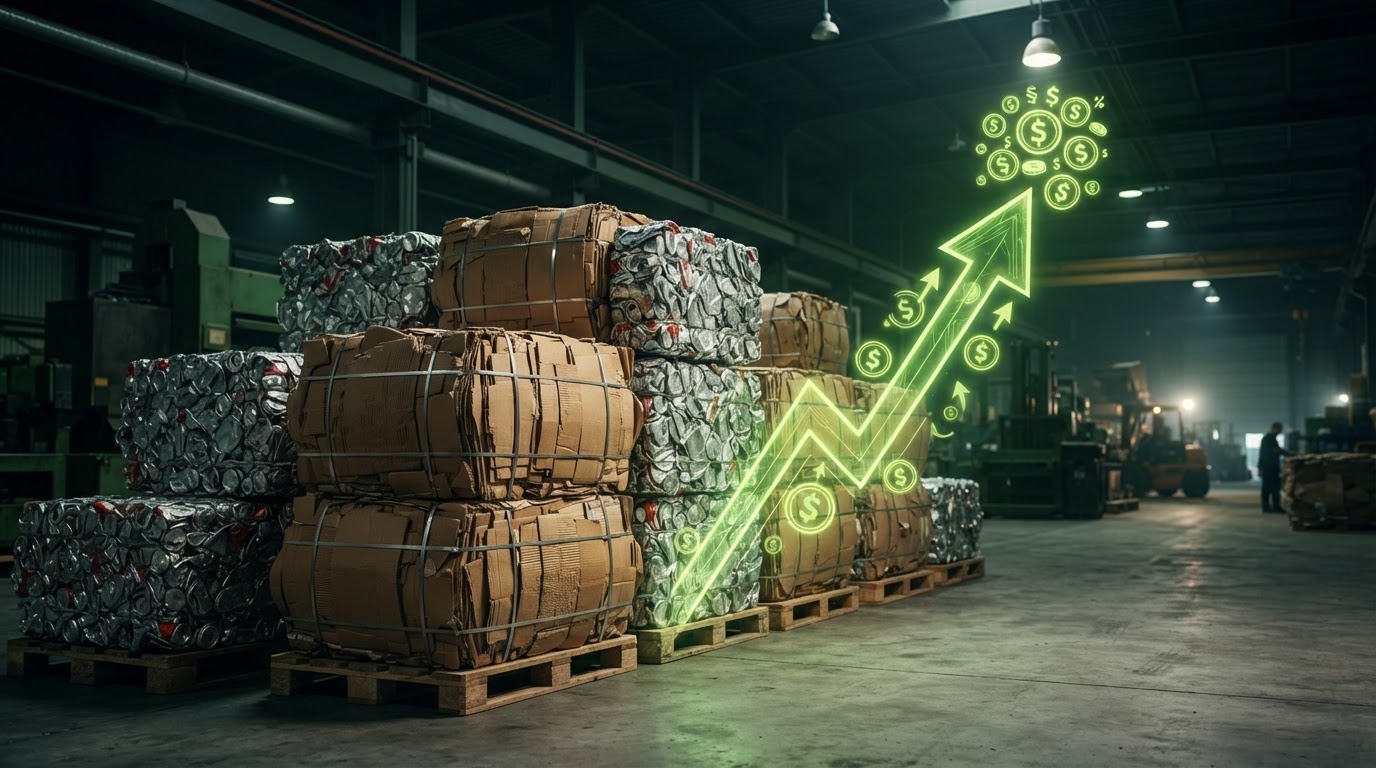
Most businesses think of recycling as a cost, something you pay for to dispose of materials responsibly. But baled recyclables have real commodity value, and that value can be returned to you through rebates. Instead of paying to throw away recyclable material, you can earn from it.
Rebates are a core part of the RME bundle, which includes the baler, pickup, rebates, and data. See how our system works for how it all fits together.
How Rebates Work
When RME picks up your baled materials, we weigh them and track the material type. Baled cardboard, plastic film, aluminum, and other materials have market values that fluctuate based on commodity pricing. RME passes that value back to you as a rebate, credited against your service costs or paid out depending on volume.
Which Materials Generate Rebates
Rebate value varies by material. Aluminum and clean cardboard typically command the strongest pricing. Plastic film and paper have moderate, fluctuating value. The key is producing clean, well-separated bales, contamination dramatically reduces value. See materials we recycle for what can generate rebates.
The Recycling Markets resource tracks commodity pricing for recyclable materials, giving context to rebate values.
The Financial Impact
For high-volume operations, rebates can significantly offset or even exceed service costs. A manufacturing plant generating tons of clean cardboard monthly might earn enough in rebates to cover most of its baler bundle cost. Our success stories document how businesses turned waste into revenue.
Want to see what your materials are worth? schedule a free onsite assessment and we'll evaluate your rebate potential.