Recycling Rebates vs. Disposal Costs: The Full Financial Picture
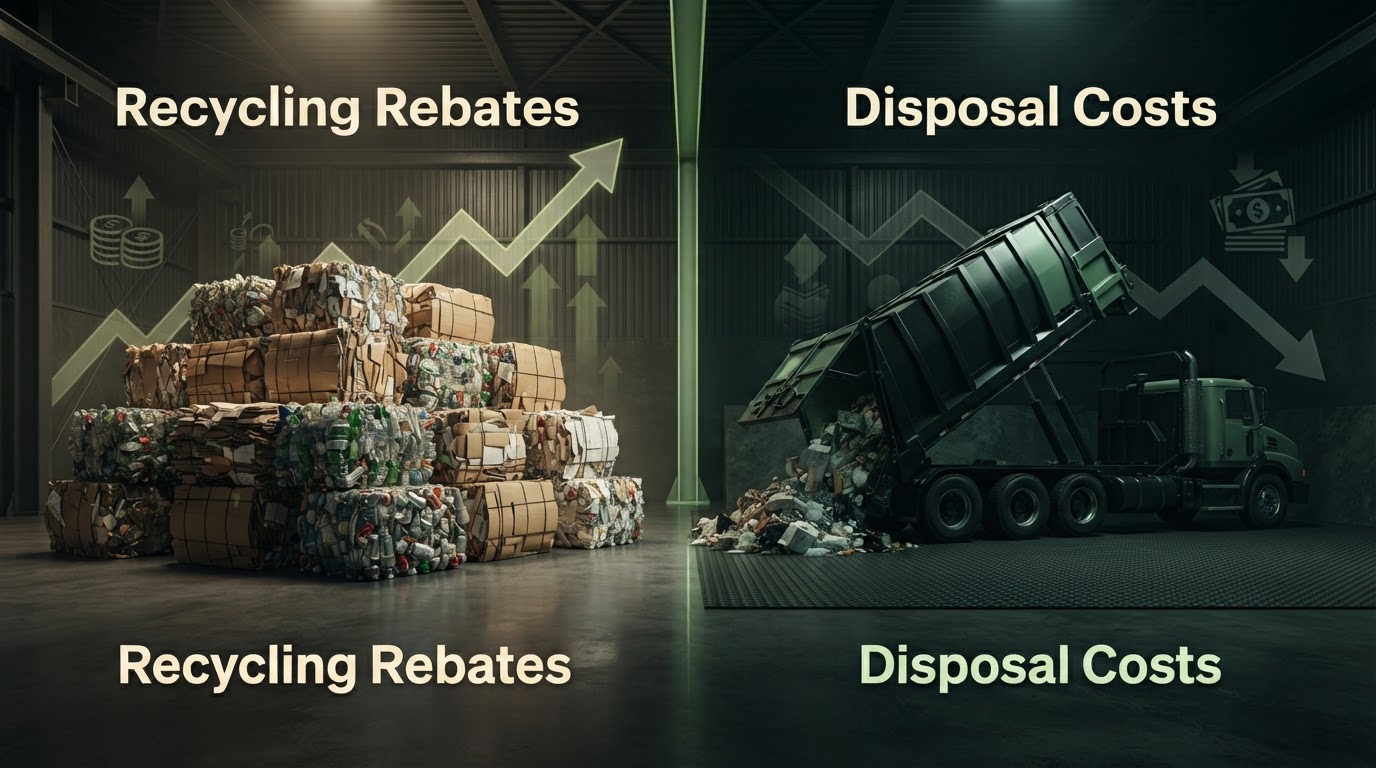
When businesses evaluate recycling, they often frame it as a cost comparison: how much does recycling cost versus disposal? But that framing misses the full picture. Baling and recycling don't just reduce disposal costs, they can generate positive revenue through rebates. The real comparison is between paying to throw material away and earning from recovering it.
The Disposal Cost Side
Traditional disposal means paying for dumpsters, pickups, fuel surcharges, environmental fees, and rate increases. Every ton of recyclable material you landfill costs money to haul and tip. Over a year, those costs compound. See our success stories for businesses that documented their disposal costs.
The Rebate Revenue Side
Baled recyclables have commodity value. Cardboard, aluminum, plastic film, and paper all command market pricing. RME passes that value back through rebates. Instead of paying to dispose of these materials, you earn from them. See materials we recycle for what generates rebates.
The Combined Picture
The full financial impact of baling combines three factors: reduced disposal costs (fewer pickups, fewer dumpsters), rebate revenue (commodity value returned to you), and predictable pricing (flat-rate vs. variable fees). Together, these often produce 50%+ cost reductions for businesses spending $1,000+ monthly. See how our system works for how it works.
The Recycling Markets resource tracks commodity pricing that drives rebate values.
When the Math Strongly Favors Baling
Baling's financial advantage grows with volume. A business generating tons of cardboard monthly sees the biggest swing, from paying substantial disposal costs to earning meaningful rebates. Even moderate-volume operations typically come out ahead when all factors are considered.
Want to see your full financial picture? schedule a free onsite assessment and we'll calculate it.