What Materials Cannot Be Baled
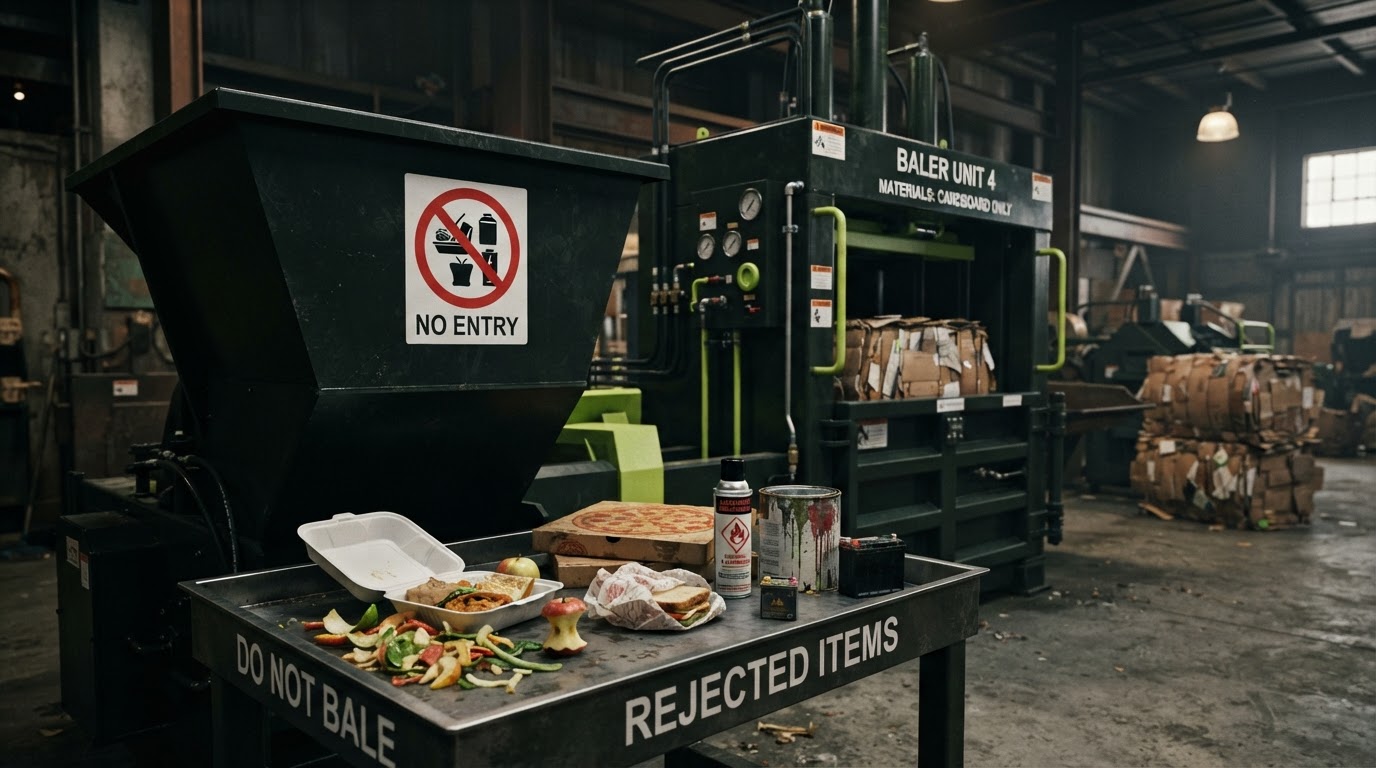
Knowing what not to bale is just as important as knowing what to bale. Putting the wrong materials in a baler can damage equipment, ruin bale value, create safety hazards, and contaminate entire loads. Here's a guide to materials that should never go in a commercial baler.
Hazardous and Regulated Waste
Never bale hazardous materials, regulated medical waste, chemicals, or anything contaminated with hazardous substances. These require specialized handling under strict regulations. RME handles only non-regulated recyclable materials. See materials we recycle for what we accept.
Food-Contaminated Materials
Materials with food residue cannot be baled for recycling. Food contamination ruins bale value and can create odor and pest problems. Cardboard or plastic with food residue should go into general waste, not the baler. Clean materials only.
Hard and Rigid Materials
Hard plastics, metal pipes, thick wood, and other rigid materials can damage baler components. Balers are designed for compressible materials like cardboard, film, and cans. Rigid materials need different handling. RME can advise on appropriate equipment for various material types.
Mixed and Composite Materials
Materials that combine multiple types, like plastic-coated paper, laminated films, or composite packaging, often can't be baled cleanly because they can't be separated into a single commodity stream. These may need to go into general waste or specialized recovery.
The EPA hazardous waste guidelines define what constitutes hazardous material requiring special handling.
Biodegradable and Compostable Plastics
Biodegradable plastics should not be mixed into standard plastic film bales, they contaminate the stream and can ruin recyclability. Keep them separate or handle through composting programs where available.
Unsure what can go in your baler? schedule a free onsite assessment and we'll clarify your material handling.