Compactor vs. Baler: Which Is Better for Your Business?
Compactors and balers are often confused, but they serve fundamentally different purposes. Understanding the difference is essential for choosing the right equipment, and for understanding why RME's baling approach delivers better value than traditional compaction for most commercial recyclers.
What a Compactor Does
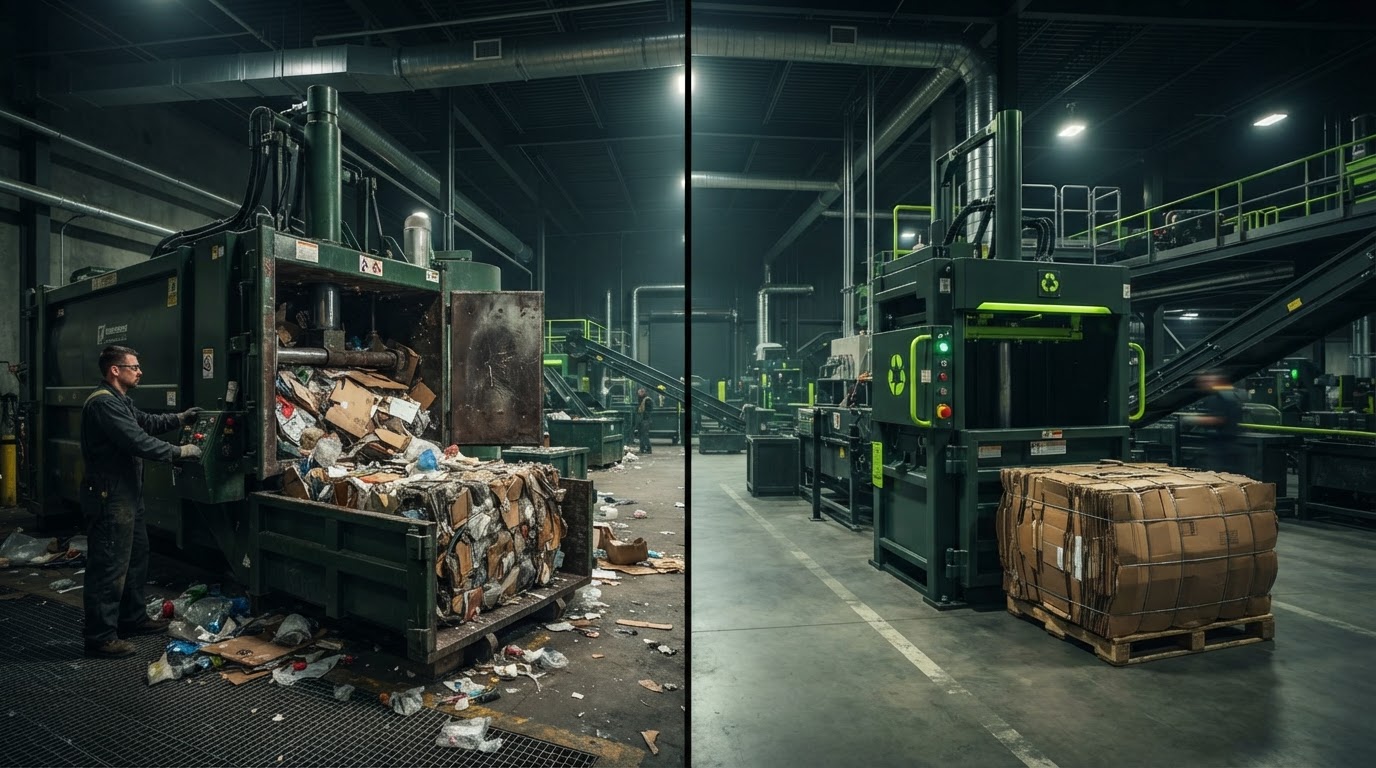
A compactor compresses waste into a container to reduce its volume. The material stays in the container and gets hauled away, still mixed, still loose (just denser). Compactors reduce pickup frequency but don't separate recyclables or create marketable bales. You're still paying to haul material away, just less often.
What a Baler Does
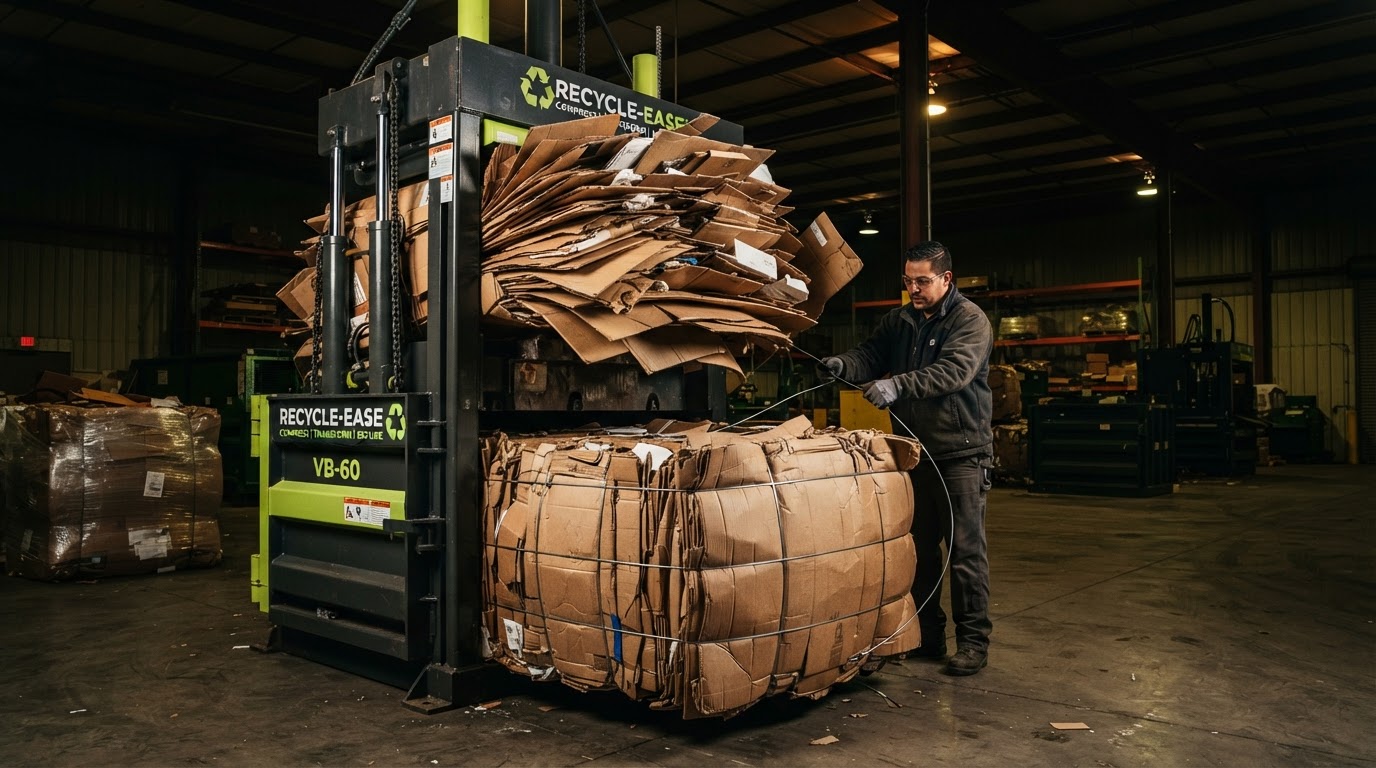
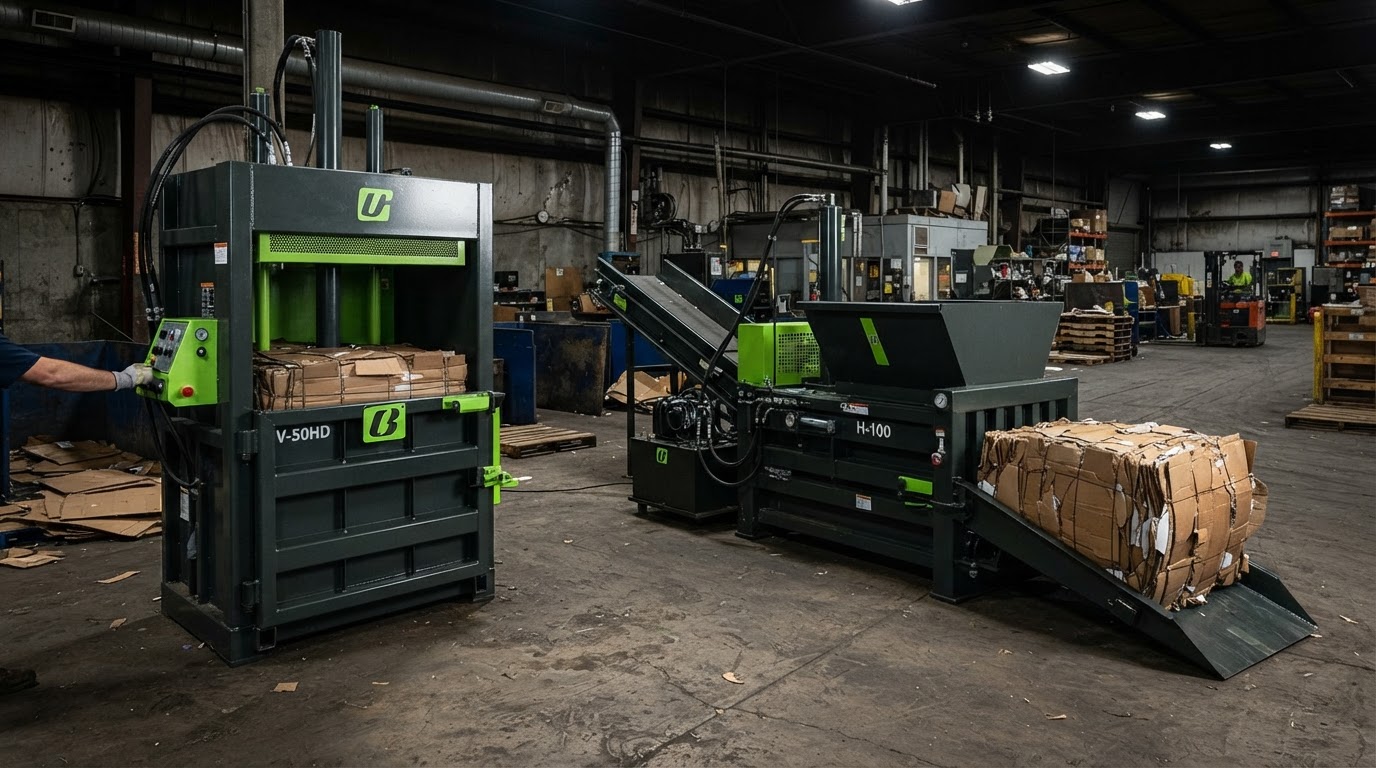
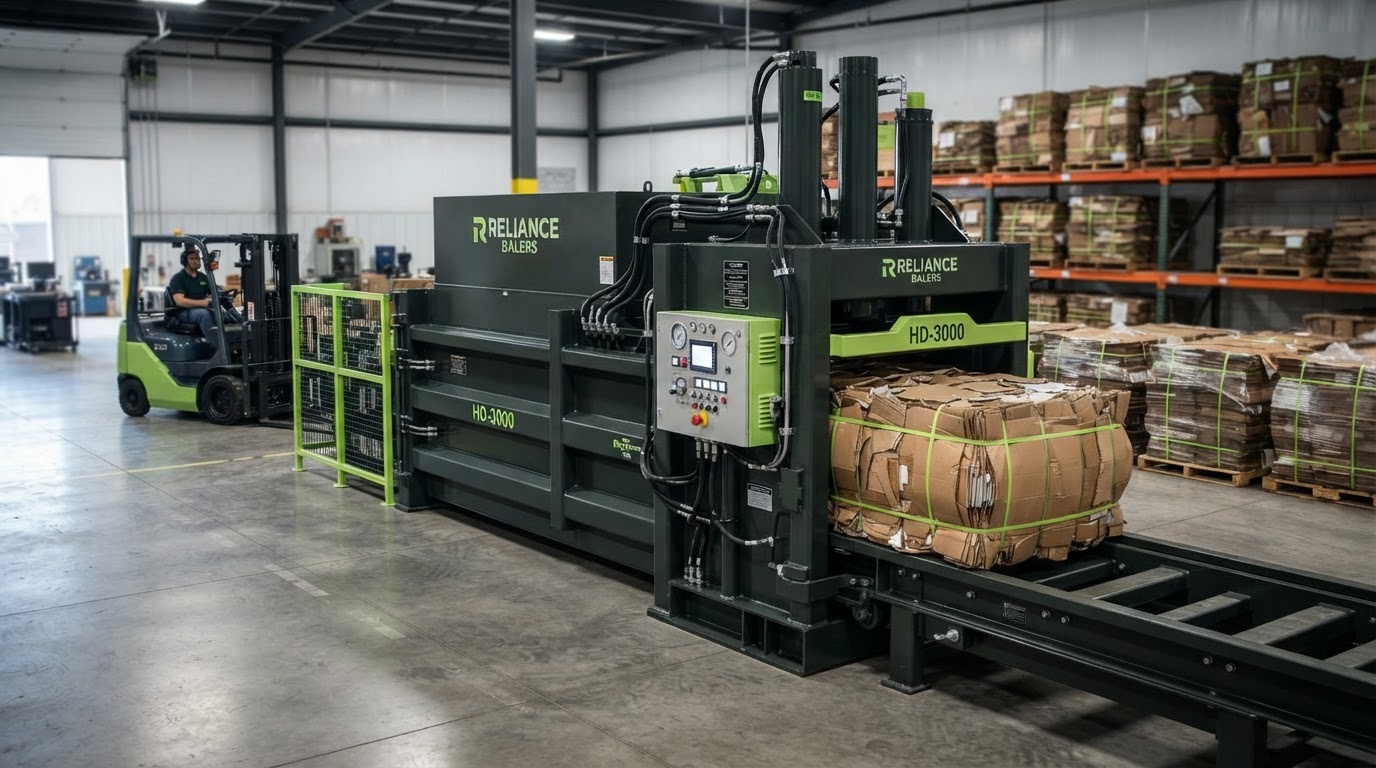
A baler compresses specific recyclable materials into dense, tied bales that are stored and picked up separately. Baled material is clean, separated by type, and has commodity value, it generates rebates rather than disposal costs. Balers turn waste into a product. See materials we recycle for what can be baled.
The Key Difference: Value Recovery
This is the crux: compactors reduce hauling costs but don't recover material value. Balers reduce hauling costs AND generate rebate revenue. For recyclable materials like cardboard, plastic, and aluminum, baling is almost always the better financial choice. Our success stories show businesses that replaced compactors with balers and saved more.
The ISRI commodity specifications define the bale standards that make recycled materials marketable.
When Each Makes Sense
Compactors make sense for non-recyclable general waste that must be landfilled. Balers make sense for recyclable materials. Most businesses need both: a baler for recyclables and a smaller container for true waste. RME helps you design the right mix. See how our system works.
Not sure which you need? schedule a free onsite assessment and we'll evaluate your stream.